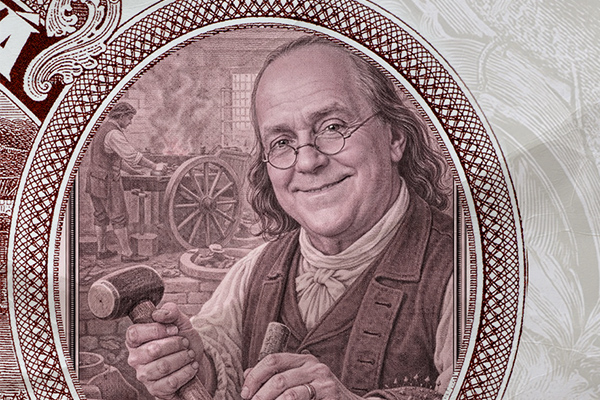
A Tale of Two Cities
A Tale of Two Cities: Franklin’s Fortune and Foresight at the Nelson Nash Institute Think Tank
JDew and Jonah attend the NNI Think Tank in Birmingham, AL.
February 12th and 13th in Birmingham, Alabama, Jonah and I had the privilege of opening the Annual Think Tank for the Nelson Nash Institute. The theme this year was simple and powerful: Think Long Range.
So we asked ourselves, who better to open a room full of Infinite Banking practitioners than a man who quite literally thought 200 years ahead?
Enter Benjamin Franklin.
The Thing He Did After He Was Gone
Most people know Franklin for flying a kite in a lightning storm. For the lightning rod. For bifocals. For the Franklin stove. For helping chart the Gulf Stream. For public libraries. For founding the University of Pennsylvania. For early fundraising concepts like matching grants. For serving as president of Pennsylvania before we called them governors.
The list is long...
But I told the audience something that surprised them.
All of that might pale in comparison to what he did in his death.
In 1790, through his last will and testament, Franklin left £1,000 sterling to the city of his birth, Boston, and £1,000 to the city of his business and death, Philadelphia.
But this was no simple gift.
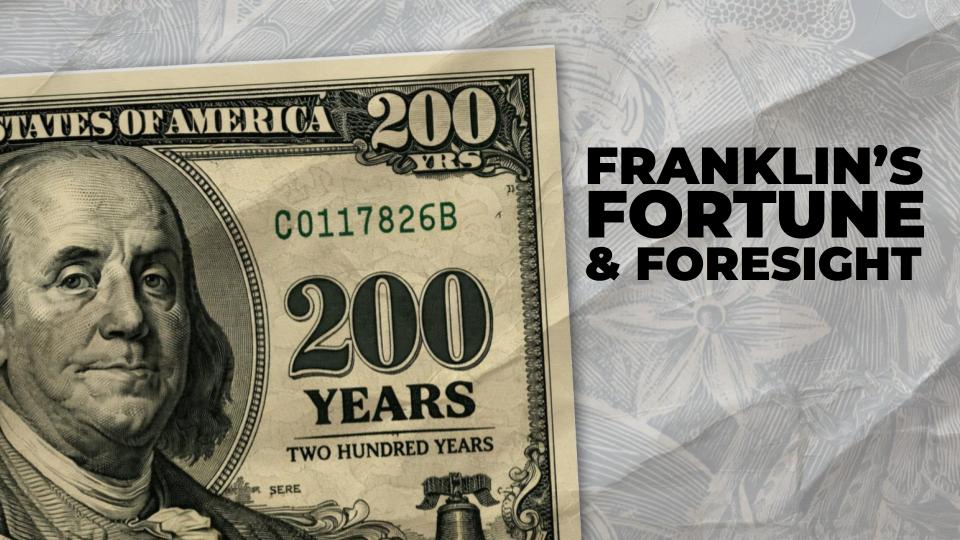
It was a 200-year experiment.
The Rules of the Game
Franklin did not just hand over the money. He structured it.
The funds were to be loaned out:
Between £15 and £60 per borrower
To men only
Married
Age 25 or younger
Of good moral character with two references
Artificers and craftsmen with a trade
Repaid at 5% interest within ten years
Managed benevolently
He even built in a “halftime.” At the 100-year mark in 1890, part of the funds could be used for public works. The remainder was to continue compounding for another century, culminating in 1990.
That is long range thinking.
And it felt right at home in a room full of Practitioners who build multi-generational systems using the Infinite Banking Concept inspired by Nelson Nash.
The Battle of the Budgets
Jonah and I did not simply lecture about it.
We turned it into a contest.
Inspired by A Tale of Two Cities by Charles Dickens, we framed it as The Battle of the Budgets.
Who handled the Benjamins better?
Boston or Philadelphia?
Jonah represented Philadelphia in an Allen Iverson jersey from the Philadelphia 76ers. I represented Boston’s constituency wearing Larry's Bird's iconic #33. We split the room. We had cheers. We had score updates. We walked through the quarters like a basketball game.
First quarter: the early loans.
Second quarter: bureaucratic slow starts.
Halftime: the 1890 centennial.
Second Half: the final push toward 1990.
We pulled our research from the excellent book Benjamin Franklin’s Last Bet by Michael Meyer. That book became the backbone of our storytelling.
On screen, we showed visuals from different eras. We even placed caricatures of people in the audience into historical roles, as if they were managing the funds in 1820 or 1875. The room laughed. They leaned in. They competed.
And all the while, we were asking a deeper question.
What happens when vision outlives the visionary?
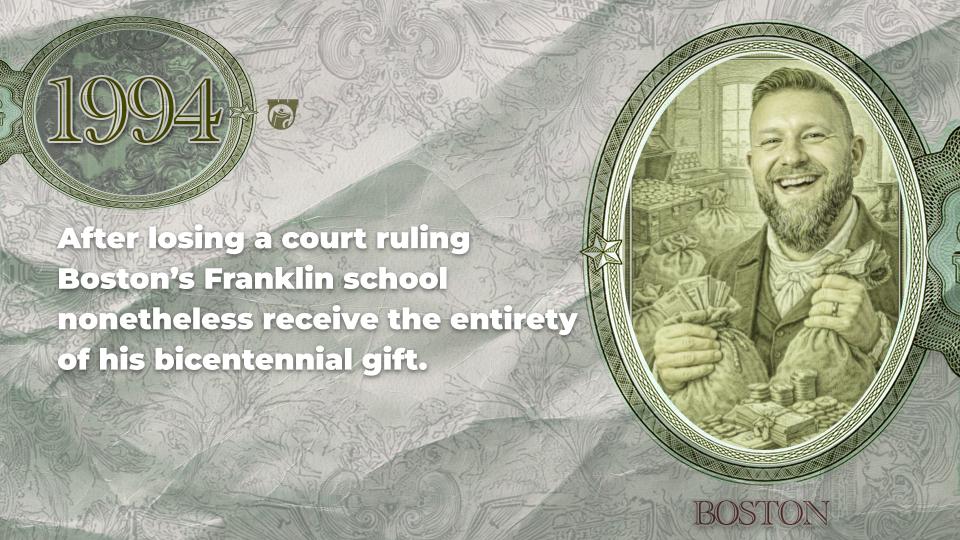
(description: Coach Jesse Durham looking mighty happy for the City of Boston)
Compared to the Other Founders
We mentioned Washington. Adams. Jefferson. Hamilton.
Great men. Monumental impact.
But Franklin structured capital to move long after he was gone.
He placed guardrails. He defined character standards. He required productivity. He demanded repayment with interest. He built accountability into benevolence.
Sound familiar?
Did They Meet His Expectations?
If you read the numbers, neither city fully hit Franklin’s bold projections. Bureaucracy slowed things. Defaults happened. Political interference showed up. Management shifted hands over generations. As Nelson Nash would have said, "they stole the peas!"
But here is what matters.
By the late 20th century, millions of dollars were deployed in both Boston and Philadelphia for public good. Trade schools. Public works. Community benefit projects.
The seed he planted in 1790 was still bearing fruit in 1990.
Two hundred years.
In a world that struggles to think two quarters ahead, Franklin thought two centuries.
Why This Story Matters Today
At the Think Tank in Birmingham, we were not just telling history. We were reinforcing a mindset.
The Infinite Banking Concept is not about a quick win. It is not about chasing rates. It is not about reacting to headlines.
It is about structure. Control. Stewardship. Patience.
Franklin’s will reflected that.
He did not simply give money away. He created a system.
And that is what long range thinkers do.
They design something that works without them.
Final Score
Both cities fought hard. Both made mistakes. Both produced impact.
Only one technically “won” our on-stage contest.
But the real winner was the idea.
Capital, properly structured, can serve generations.
That is the kind of thinking we celebrate at the Nelson Nash Institute.
And that is the kind of foresight that built a nation.
Here is the question we left the audience with:
If someone studied your financial structure 200 years from now, what would they say about your long range thinking?


